
By Dr. Yekula H. Hruday Mohan, Consultant Cardiologist, MedUnited Palakollu
Your heart does not always announce a problem with severe chest pain.
Sometimes, the warning signs can be mild, unusual or easy to mistake for acidity, tiredness, stress or a normal part of getting older. But when a heart problem is developing, recognizing the signs early can make an important difference.
As a cardiologist, one of the most important messages I want people to remember is this:
Do not wait for heart symptoms to become severe before taking them seriously.
Heart disease can develop gradually, while a heart attack can occur suddenly. Knowing the warning signs and understanding when to seek medical attention can help you get the right treatment at the right time.
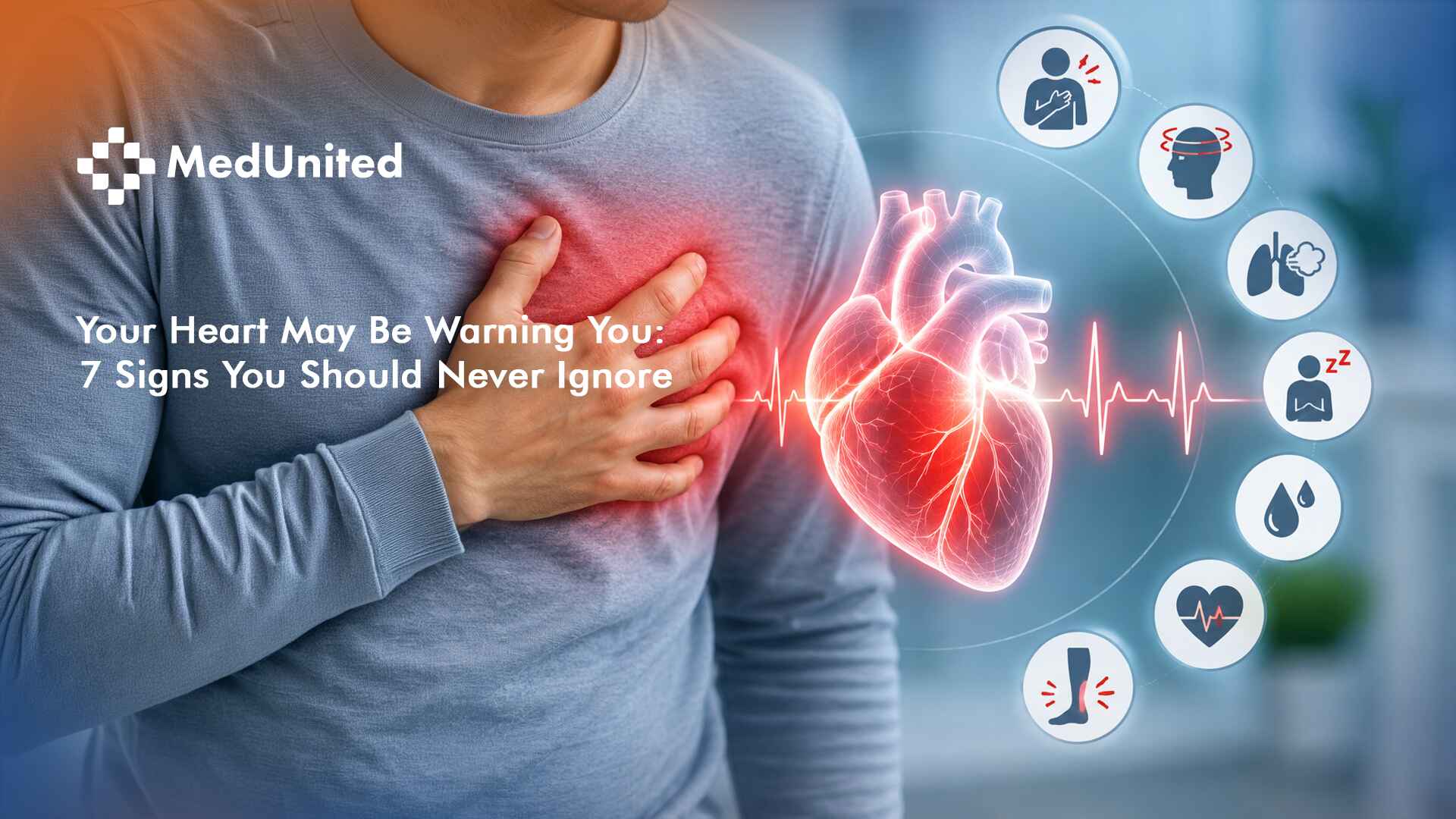
Here are seven symptoms you should never ignore.
Chest Pressure, Tightness or Discomfort
Chest discomfort is one of the most recognized warning signs of a heart problem.
It may not always feel like sharp pain. Some people describe it as:
- Pressure or heaviness
- Tightness or squeezing
- Fullness in the chest
- Burning or discomfort
- A sensation of something sitting heavily on the chest
Heart attack-related discomfort commonly occurs in the centre or left side of the chest and may last for several minutes, disappear and return, or gradually become worse.
A common mistake is to immediately assume that chest discomfort is caused by acidity or gas.
While many causes of chest pain are not related to the heart, new, unexplained or recurring chest discomfort should not be self-diagnosed.
If the discomfort is severe, persistent or accompanied by other warning symptoms, seek emergency medical care immediately.
Breathlessness That Is New or Unusual
Shortness of breath is another important warning sign.
You may notice that you become breathless while doing an activity that previously felt easy. In some cases, breathlessness can occur even at rest.
Importantly, shortness of breath can occur with or without chest discomfort during a heart attack.
Persistent or unexplained breathlessness can also be associated with conditions such as heart failure and other cardiovascular problems.
Do not simply assume that increasing breathlessness is because of age, lack of fitness or stress without getting it evaluated.
Pain or Discomfort That Spreads Beyond the Chest
Heart-related discomfort does not necessarily stay in the chest.
Pain or pressure may spread to:
- One or both arms
- Shoulder
- Back
- Neck
- Jaw
- Upper abdomen
The American Heart Association and CDC both identify discomfort in these areas as possible heart attack symptoms.
This is especially important when the discomfort occurs together with chest pressure, breathlessness, sweating, nausea or light-headedness.
Unusual Sweating, Nausea or a Feeling That Something Is Not Right
Breaking out into a cold sweat without an obvious reason can accompany a heart attack.
Some people may also experience:
- Nausea or vomiting
- Indigestion-like discomfort
- Light-headedness
- Weakness
- A feeling of impending illness
These symptoms can be particularly easy to dismiss because they can resemble gastrointestinal problems or other common illnesses.
If these symptoms appear suddenly, especially along with chest discomfort or breathlessness, they should be treated seriously.
Unusual or Unexplained Fatigue
Not every heart problem begins dramatically.
Some people experience unusual tiredness or weakness, particularly when it is new, unexplained or out of proportion to their usual activity.
Women, in particular, may experience symptoms such as unusual tiredness, shortness of breath, nausea or discomfort in the back, shoulder or arm during a heart attack.
This does not mean that every episode of fatigue indicates heart disease.
But persistent or unexplained fatigue deserves attention, particularly if you have risk factors such as diabetes, high blood pressure, high cholesterol, smoking, obesity or a family history of heart disease.
Dizziness, Light-Headedness or Fainting
Feeling suddenly light-headed, unusually weak or faint can have many causes.
However, these symptoms can also occur when the heart is not pumping effectively or when the heart rhythm becomes abnormal.
Arrhythmias, heart failure and other cardiovascular conditions can sometimes present with dizziness or fainting.
If you experience unexplained fainting, especially during physical activity, or if dizziness occurs together with chest discomfort, palpitations or breathlessness, medical evaluation is important.
A Racing, Pounding or Irregular Heartbeat
You may occasionally notice your heart beating faster after exercise, stress or excitement. That is usually a normal physiological response.
But a heartbeat that suddenly becomes very fast, irregular, pounding or fluttering without an obvious reason should not always be ignored.
Palpitations can occur with several conditions, including abnormal heart rhythms.
They become particularly important when associated with:
- Dizziness
- Fainting
- Chest discomfort
- Breathlessness
- Severe weakness
In such situations, a cardiology evaluation may be necessary to understand what is causing the abnormal rhythm.
Women May Experience Heart Attack Differently
One of the most important misconceptions is that a heart attack always looks like dramatic chest pain.
Chest discomfort remains the most common symptom in women as well, but women may be more likely to experience additional or less typical symptoms such as unusual fatigue, shortness of breath, nausea or vomiting and pain in the back, shoulder or arm.
This is one reason symptoms should not be dismissed simply because they do not match the “classic” picture of a heart attack.
When something feels unusually wrong, it is safer to get evaluated than to assume it is harmless.
When Should You Treat It as an Emergency?
If you or someone around you develops symptoms suggestive of a heart attack – particularly chest pressure or discomfort accompanied by breathlessness, sweating, nausea, light-headedness or pain spreading to the arm, back, neck or jaw – do not wait for the symptoms to disappear.
Heart muscle damage increases the longer blood flow remains blocked, so timely treatment matters.
Do not drive yourself if you are experiencing severe symptoms. Activate emergency medical services and seek immediate hospital care.
At the hospital, doctors may use tests such as an ECG, blood tests including cardiac biomarkers such as troponin and other investigations to determine whether a heart attack or another cardiac condition is present.
Not Every Chest Pain Is a Heart Attack – But Every New Symptom Deserves the Right Evaluation
Chest discomfort can have many causes, including gastrointestinal, muscular, respiratory and anxiety-related conditions.
The challenge is that symptoms alone cannot always reliably distinguish them.
That is why it is important not to rely on assumptions such as:
“It’s just acidity.”
“I am too young to have a heart problem.”
“I will wait and see if it goes away.”
“It is probably stress.”
Especially if the symptom is new, severe, recurring or associated with other warning signs, medical evaluation is the safer approach.
Know Your Heart Risk Before a Problem Happens
Heart health is not only about responding to emergencies.
Prevention matters.
Your cardiovascular risk can be influenced by several factors, including:
- High blood pressure
- Diabetes
- High cholesterol
- Smoking or tobacco use
- Excess body weight
- Physical inactivity
- Unhealthy diet
- Excessive alcohol use
- Family history of cardiovascular disease
- Increasing age
Regular health assessments can help identify risk factors before they develop into major complications.
What Can You Do for a Healthier Heart?
Small, consistent habits can contribute significantly to cardiovascular health.
Monitor your numbers
Keep track of blood pressure, blood sugar and cholesterol when recommended by your doctor.
Stay physically active
Regular physical activity supports cardiovascular health. Your appropriate level of exercise depends on your age, health status and existing medical conditions.
Eat for your heart
Prioritize vegetables, fruits, whole grains, legumes, nuts and other nutrient-dense foods while limiting excessive salt, saturated fat and highly processed foods.
Avoid tobacco
Smoking and tobacco exposure are major cardiovascular risk factors.
Maintain a healthy weight
If you are overweight, even meaningful lifestyle improvements can contribute to better cardiovascular risk management.
Manage stress and sleep
Long-term stress and poor sleep can affect overall cardiovascular health. Building sustainable sleep, activity and stress-management habits is part of comprehensive heart care.
Do not ignore regular check-ups
Prevention is particularly important when you have risk factors but no obvious symptoms.
Advanced Cardiac Care Closer to Home
For people searching for a cardiologist in Palakollu or cardiologist in Amalapuram, access to timely specialist evaluation is an important part of heart care.
MedUnited’s Cardiology Department provides comprehensive cardiac services including heart check-ups, OPD cardiology, diagnostic cardiology, lifestyle management, emergency cardiac services and 24/7 Cath Lab services.
At MedUnited Palakollu, the hospital’s cardiac services include advanced imaging, minimally invasive cardiac procedures, continuous monitoring and coordinated emergency care.
The hospital also has a 24/7 emergency and critical-care setup and a Cath Lab designed to support timely intervention for cardiac emergencies.
You can learn more about MedUnited Cardiology Services and explore Dr. Yekula H. Hruday Mohan’s profile for his qualifications and areas of expertise. (MedUnited)
A Final Message From a Cardiologist
Your heart does not always give you a dramatic warning.
Sometimes, it may begin with breathlessness you have never experienced before.
Sometimes, it may be unusual fatigue.
Sometimes, it may be pressure in your chest that you assume is acidity.
And sometimes, the symptoms may come and go.
Do not wait for a warning sign to become severe before you take it seriously.
Knowing the symptoms, understanding your risk factors and seeking timely medical attention can make a meaningful difference in cardiovascular care.
If you experience symptoms that could indicate a heart attack, seek emergency medical care immediately.
Listen to your heart. Recognize the warning signs. Act without delay.
– Dr. Yekula H. Hruday Mohan
Consultant Cardiologist
MedUnited Hospitals, Palakollu
This article is for general health awareness and does not replace an individual medical consultation or emergency medical care.