
By Dr. K. Shyamala Pragnya, Consultant Pulmonologist, MedUnited Hospitals – Palakollu
Smoking Doesn’t Just Affect Your Lungs-It Affects Your Entire Life
As a pulmonologist, one of the most common things I hear is:
“Doctor, I’ve been smoking for years and I’m perfectly fine.”
Unfortunately, many smoking-related diseases develop silently over time. By the time symptoms become obvious, significant damage may have already occurred.
Whether it’s cigarettes, bidis, cigars, vaping products, or passive smoking, tobacco exposure can affect almost every organ in the body. It significantly increases the risk of chronic lung disease, heart disease, stroke, and multiple cancers. According to global health estimates, tobacco use remains one of the leading preventable causes of death worldwide.
The encouraging news is that quitting smoking at any age brings measurable health benefits.
What Happens Inside Your Body When You Smoke?
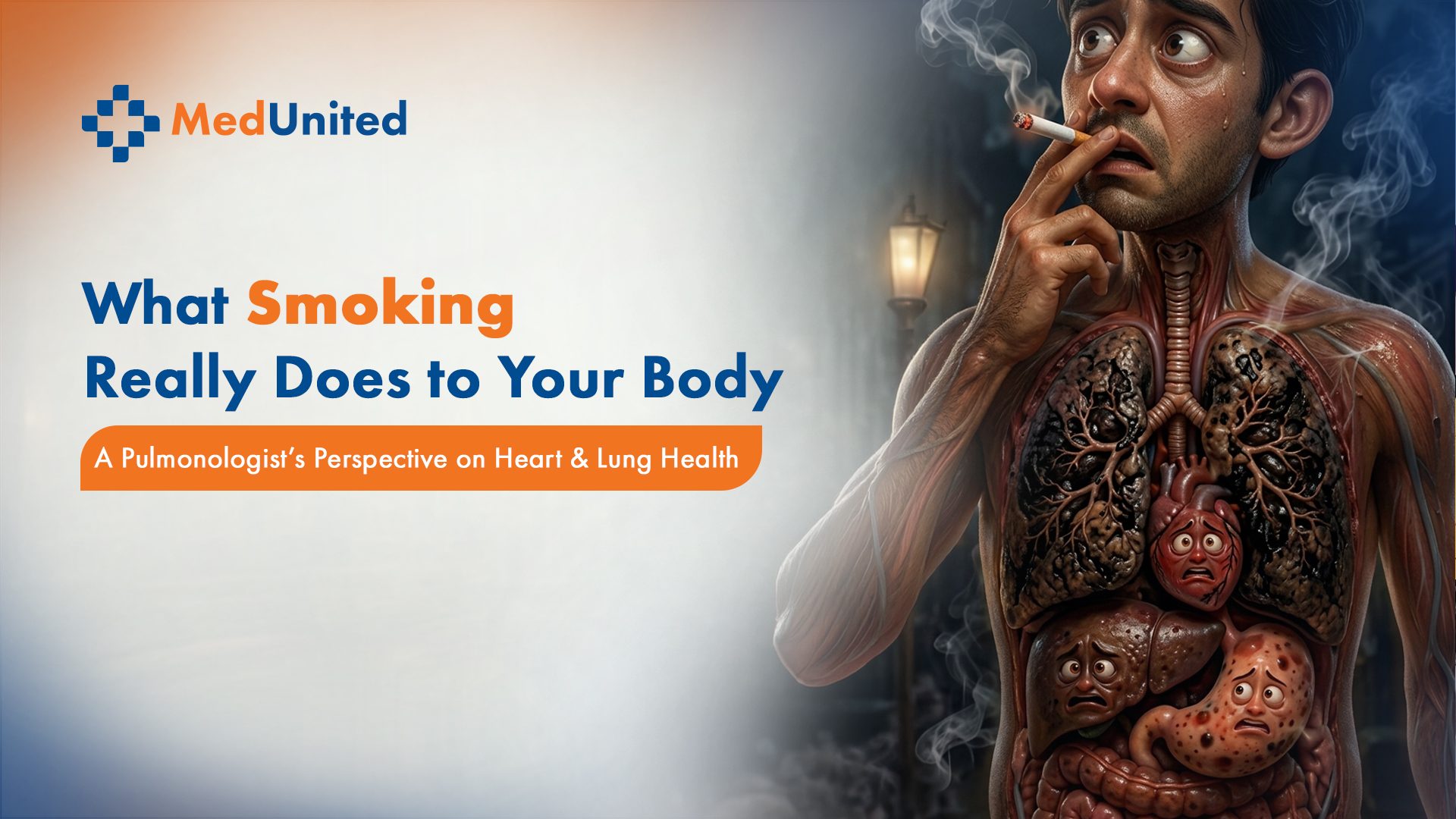
Every puff introduces thousands of chemicals into your body, many of which are harmful and several are known carcinogens.
Smoking can:
- Damage lung tissue
- Reduce oxygen supply
- Narrow blood vessels
- Increase blood pressure
- Accelerate plaque formation in arteries
- Weaken the immune system
- Reduce the body’s ability to heal
Over time, these effects can become life-threatening.
The Impact on Your Lungs
The lungs are among the first organs to suffer.
Smoking increases the risk of:
- Chronic Obstructive Pulmonary Disease (COPD)
- Chronic bronchitis
- Emphysema
- Recurrent chest infections
- Persistent cough
- Breathlessness
- Reduced lung capacity
- Lung cancer
At MedUnited Pulmonology, we routinely evaluate patients with chronic cough, wheezing, breathing difficulty, and smoking-related lung disease using evidence-based respiratory care and advanced diagnostic support.
Smoking and Your Heart: A Dangerous Combination
Many people associate smoking only with lung disease, but it is equally dangerous for the heart.
Smoking can:
- Increase the risk of heart attack
- Increase stroke risk
- Damage blood vessels
- Promote blood clot formation
- Increase blood pressure
- Reduce oxygen delivery to the heart
Even people who smoke only a few cigarettes a day are not protected from cardiovascular risk.
Warning Signs You Should Never Ignore
Please seek medical evaluation if you experience:
- Persistent cough lasting more than 3 weeks
- Blood in sputum
- Breathlessness
- Wheezing
- Chest pain
- Frequent respiratory infections
- Sudden weight loss
- Fatigue with minimal activity
Early diagnosis can significantly improve treatment outcomes.
What About Passive Smoking?
Even if you don’t smoke yourself, regular exposure to tobacco smoke can increase the risk of:
- Asthma attacks
- COPD
- Heart disease
- Stroke
- Lung cancer
- Respiratory infections in children
Protecting your family from second-hand smoke is equally important.
Is Vaping Really Safer?
Many people believe vaping is harmless.
The reality is that research continues to identify important health concerns associated with e-cigarettes and vaping products. They can expose users to harmful substances and are not considered risk-free.
If your goal is better health, quitting nicotine completely is the healthiest option.
The Good News: Your Body Starts Recovering After You Quit
One of the most rewarding conversations I have with patients is about recovery after smoking cessation.
Your body begins healing remarkably quickly:
- Heart rate and blood pressure begin improving
- Blood circulation improves
- Lung function gradually recovers
- Cough and breathlessness may reduce
- Risk of heart disease declines over time
- Long-term cancer risk decreases compared to continued smoking
It’s never too late to quit.
Prevention Is Better Than Treatment
I encourage every smoker and former smoker to undergo regular health evaluations, especially if they have:
- Persistent cough
- Breathlessness
- Family history of lung disease
- Long-term smoking history
- Occupational dust or pollution exposure
Timely screening and medical consultation can identify disease before complications develop.
Comprehensive Pulmonology Care at MedUnited Hospitals
At MedUnited Hospitals, our Pulmonology Department provides comprehensive care for:
- Chronic cough
- Asthma
- COPD
- Respiratory allergies
- Smoking-related lung diseases
- Tuberculosis
- Sleep-related breathing disorders
- Pleural diseases
- Critical respiratory care
- Advanced pulmonary procedures and long-term respiratory management
If you or a loved one has persistent respiratory symptoms or needs expert guidance on quitting smoking and protecting lung health, expert consultation is available with Dr. K. Shyamala Pragnya, Consultant Pulmonologist, at MedUnited Hospitals.